
Search is no longer just about blue links.
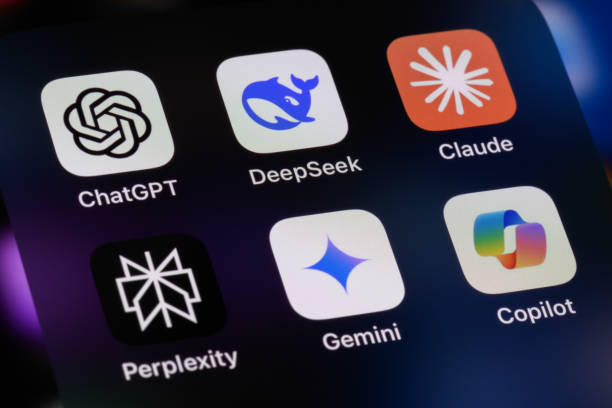
Today, people often see answers before they see websites. Google, Perplexity, ChatGPT, Gemini, and Claude all summarize information directly inside AI-powered responses. For businesses, this changes what “ranking” really means.
If your site is not being referenced, summarized, or trusted by these systems, visibility slowly disappears—even if your pages still rank in traditional search.
This guide explains how to rank in AI search results and how to stay there, using approaches that work right now. These ideas apply whether you run a local business, a SaaS company, or a service brand operating in the U.S.
What Are AI Search Results—and Why They Matter

AI search results are answers generated by large language models and search engines that pull information from multiple sources and combine it into one response.
Instead of ten links, users often get:
- A summarized explanation
- A list of steps
- A comparison
- A direct recommendation
If your content is clear and trusted, it can be included. If not, it gets ignored.
This is why questions like how to rank in AI search, how to rank in Google AI overview, and how to rank in AI overviews have become important for business owners.
AI systems don’t reward pages that are clever. They reward pages that are useful, structured, and consistent.
How AI Systems Decide Which Content to Use
AI search systems look at patterns across your site, not just one page.
They evaluate:
- Does this page directly answer the question?
- Is the explanation easy to understand?
- Is this website consistently about the topic?
- Does the brand look real and trustworthy?
This applies whether the answer appears in:
- Google AI Overviews
- Perplexity answers
- ChatGPT responses
- Gemini summaries
- Claude-generated explanations
If your site only touches a topic once, it rarely gets cited. This is where AI SEO and Answer Engine Optimization overlap.
This guide is useful for a deeper breakdown of how Google handles AI summaries.
How to Write Content That AI Search Actually Uses
The biggest mistake businesses make is writing long content that never gets to the point.
AI prefers content that answers first and explains second.
1. Answer the Question Immediately
If someone searches “how to rank in AI search results,” your page should say exactly that—clearly—near the top.
Don’t warm up.
Don’t overexplain.
Start with the answer.
2. Use Simple Headings That Match Real Searches
AI systems rely heavily on headings to understand intent.
Good examples:
- How does AI decide which content to show?
- How do you rank in AI search results?
- What helps content stay visible in AI answers?
This structure helps with ChatGPT SEO, Gemini SEO, Perplexity SEO, and Claude SEO, because all of them rely on question–answer logic.
Why Structure Matters More Than Keywords Now
Keywords still matter, but structure matters more.
AI engines extract meaning from:
- Headings
- Bullet points
- Short paragraphs
- Clear definitions
Instead of repeating phrases like “best AEO agency” or “AI SEO services,” focus on explaining things clearly. When your site consistently explains AI search well, those terms associate naturally with your brand.
This is how domain-level authority builds over time.
You can see this approach reflected in modern AI SEO services.
What This Means for Business and Service Websites
Most business websites already have:
- Service pages
- Blog posts
- Location pages
To perform well in AI search, these pages should:
- Answer common customer questions directly
- Use short sections instead of long blocks of text
- Link to related topics naturally
For example, a page about AI ranking shouldn’t stand alone. It should connect to broader topics like:
- Answer Engine Optimization
- Generative Engine Optimization
- LLM-focused SEO
That’s how AI systems understand depth.
Build Topic Authority Instead of Chasing Rankings
One page rarely ranks in AI search by itself.
AI systems look for topic coverage, not isolated pages.
If your site talks about AI search, it should also cover:
- How AI summaries work
- How Perplexity selects sources
- How ChatGPT references websites
- How Gemini handles business information
This creates trust.
If you’re exploring how Perplexity fits into this ecosystem, this article connects well here:
👉 https://aeoagency.us/meet-perplexity-comet/
Why Credibility Signals Matter More Than Ever
AI systems prefer sources that feel stable and real.
That includes:
- Clear business information
- Consistent branding
- Real service pages
- A focused niche
This is why specialized agencies—not general blogs—often appear inside AI answers.
Brands positioned clearly as an AEO agency in the USA or an AI SEO services provider are easier for AI to classify and trust than generic marketing sites.
Staying Visible in AI Search Long-Term
Ranking once is easy. Staying visible is harder.
To maintain visibility:
- Update content when search behavior changes
- Expand topics instead of rewriting the same page
- Keep explanations simple and current.
- Strengthen internal links as your site grows
This approach helps with:
- ChatGPT ranking services
- Gemini ranking services
- Perplexity ranking services
- Claude ranking services
Not because of keywords—but because your site becomes a reliable reference.
Start Ranking in AI Search Today
Ranking in AI search results isn’t about tricks or hacks. It’s about clarity, consistency, and trust.
If your content clearly answers real questions and your site shows depth in AI-related topics, AI systems will use it—and keep using it.
This is the foundation behind modern AI SEO, GEO, and AEO strategies. It’s also what agencies focused on answer-driven optimization help businesses implement at scale.
If you want to understand how these ideas apply to your own website, you can explore how our AI ranking services help businesses improve visibility across AI-powered search platforms.
If you’d rather talk through your goals or get clarity on what to fix first, you can reach out to the AEO Agency USA team directly and start with a simple conversation.